Dinner Table Conversions

On remembering, rupture, humility, and the possibility of peace

Twelve of us were gathered around the dinner table in Maine last weekend when the youngest of my brother’s four children asked:

Where were you when the planes crashed into the buildings?”

And one by one, we began telling our stories.

How old we were. Where we were.
Who we were with.
What we were doing.
What we remember hearing.
What we remember feeling.

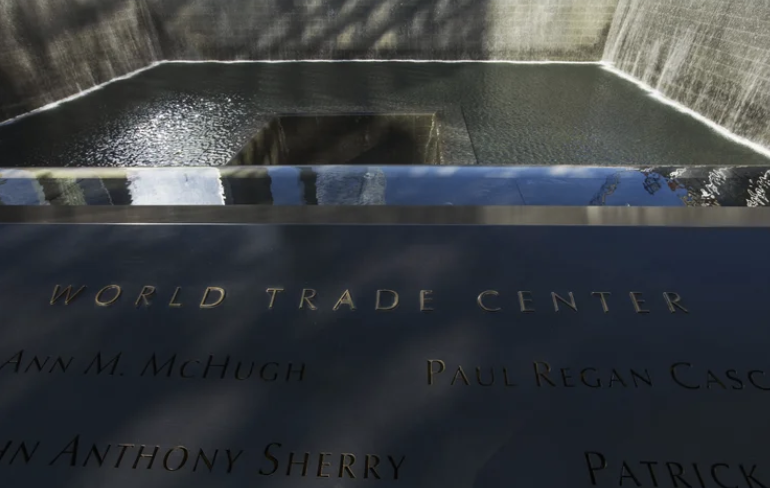
Eventually, the conversation turned away from experiences on the day of the collapse towards more private and interior impressions at the 9/11 Memorial, and the visceral sense of desolation that lingers in the atmosphere around the site: water descending into the enormous absence left by the attack; the names of the victims inscribed around the edges of that emptiness; and the hollow feeling of being gutted while standing in a place where so much and so many lives had been lost.

And I found myself thinking about that massive gaping hole as a metaphor for all the places we experience despair, personally and collectively.

A death.
A betrayal.
An addiction.
A divorce.
A rupture.
Something said or done that can never quite be unsaid or undone.

There is a before.

And there is an after.

And sometimes we spend years standing around the hole, contemplating what was lost.

We don't all experience desolation from the same place. We don't carry the same histories.

One person may feel fear. Another, anger. Someone may remember trying to hold everyone together. And there is always someone who felt completely unheard, unseen or forgotten.

Sometimes, when we allow ourselves to communiccate honestly and hear with an open heart, we discover that the person sitting across the table from us has a perspective we have never considered.

And that can be uncomfortable. Because listening to another person's experience may require us to question our own.

Maybe I didn't see something. Maybe I misunderstood something. Maybe something I thought was harmless was painful for someone else. Maybe something I believed was necessary was experienced as abandonment. Maybe something I called a boundary was actually a bypass.

When we towards another in the course of an authentic exchange, they may serve up a new perspective. And maybe, in that moment, we decide to admit: “I hadn't seen it that way before.”

And that may be one of the most important choices we ever make. Because turning toward conflict requires something that turning away doesn't:

Humility.

There are times when we need to turn away. There are times when distance is necessary. There are times when protecting ourselves is the right thing to do. But sometimes turning away means we are are refusing to turn toward the possibility of transformation.

And that isn't peace. That's avoidance.

The pathway to peace isn't the absence of conflict. It is our willingness to become authentic inside the conflict. To own our part. To listen without immediately defending ourselves. To allow someone else's experience to exist alongside our own. To become curious about what we don't yet understand.

I keep thinking about that memorial: Tons of water pouring into an enormous space built around absence. And I wonder:

What do we build around the empty spaces left by ruptures in our families, friendships, and communities?

Do we build walls? Silence? Stories about who was right and who was wrong? Do we protect ourselves from ever having to revisit what happened? Or do we, carefully and humbly, turn towards the devastation as a way to build something new?

Because devastation changes us.

Being harmed changes us.

And our response to being harmed changes us, too.

The question isn't whether what happened affected us.

It did.

The question is: What will we create from what happened?

Maybe peace doesn't begin when the conflict ends. Maybe peace begins when we are willing to sit at the table and tell a personal truth about where we are—and then stay long enough to hear where someone else is.

We don't have to agree on every detail of what happened. Maybe it’s simply a matter of being respectful enough to recognize that another person's experience is real, too.

And perhaps that is one small way we begin to move from destruction toward creation. From judgment toward understanding. From defensiveness toward curiosity.

From turning away— to turning toward.

Maybe peace really does start at the dinner table.


~ © Barbara Dugan, 11 September 2026

Next
Next

Muladhara